
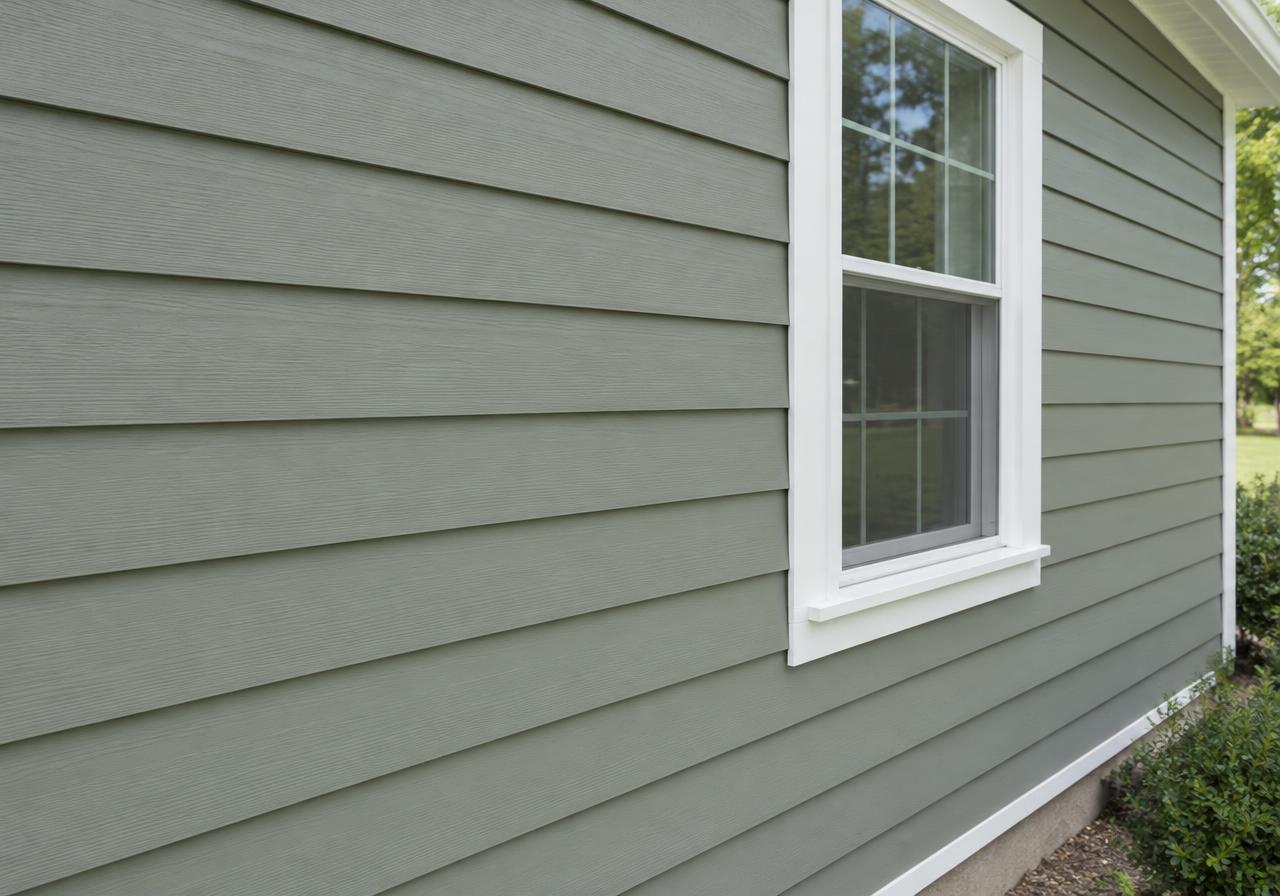
Three things decide it: how far the damage extends, the condition of the sheathing behind the siding, and whether the original material can still be matched. Damage confined to one or two boards on a single wall is usually a repair. Warping or failures across several elevations, or wet sheathing, points to replacement.
What actually decides repair versus replacement?
Homeowners usually ask this question after one specific thing happens — a storm, a ladder going through a board, or a wall that has started to look wavy. The honest answer is that it depends on the extent of the damage and the condition of the wall behind it, and that is not something anyone can tell you over the phone.
We look at three things on site. First, how far the damage runs: one wall, one elevation, or the whole house. Second, what is behind the siding, because siding is a shedding layer and the sheathing underneath it is what tells you whether water has been getting in. Third, whether the existing material can be matched closely enough that a repair does not end up looking worse than the damage did.
That review happens before we make a recommendation on siding installation, replacement and repair, and pricing is confirmed after the project has been looked at, not before.
When siding can usually be repaired
Isolated impact damage is the clearest case. A branch, a mower-thrown rock or a hail strike that cracks two or three boards on one elevation is a board-for-board swap. The rest of the wall is doing its job.
Loose boards are often a fastening problem rather than a material problem. Vinyl in particular expands and contracts through an East Texas summer, and if it was nailed too tight at install, boards work loose at the ends. Re-hanging a section fixes it.
Localized trim rot is also repairable in most cases. Corner boards, window trim and the bottom course take the worst of the wind-driven rain here, and they can be cut out and rebuilt without touching the field of the wall. Exterior trim gets coordinated with the siding work so the repair reads as one surface, not a patch.
Signs that point to full replacement
Widespread warping is the big one. If boards are buckling along a whole elevation — not at one spot — the cause is usually behind the siding or in how it was installed, and replacing individual boards just resets the clock on the same failure.
Repeat failures in the same area are a second signal. If the same corner, the same wall below a valley, or the same run under a window has been patched more than once, the repair is not addressing the source. Fixing it properly usually means opening that section up.
Damage across multiple elevations is the third. After a serious storm, hail often hits two or three sides of a house. Once you are replacing substantial areas on several walls, you are paying replacement labor for a patchwork result that will never match, and full replacement becomes the better value. Texas has recorded more major hail events than any other state over the past decade, according to Roofing Contractor, so this comes up here more than it does in most of the country.
What's behind the siding matters more than the siding
Siding is not waterproof and was never meant to be. It sheds the bulk of the water, the weather barrier and flashing handle the rest, and the sheathing behind that should stay dry. When we pull a damaged board, what we find on the sheathing decides most of the conversation.
Dry, sound sheathing with clean fasteners means the damage is cosmetic and a repair is reasonable. Dark staining, soft spots, delaminated OSB or rusted fasteners mean water has been sitting in the wall, and that work moves from a siding job to a structural repair — removing damaged materials, repairing framing and sheathing, then re-cladding.
That is also the point where it overlaps with water damage and water intrusion repairs, where the goal is to address the source of the intrusion rather than cover it back up. We do construction repairs on that side of the work; we do not claim mold remediation or restoration certification.
The matching problem nobody mentions until the work starts
Even when a repair makes structural sense, matching can sink it. Vinyl and painted fiber cement both fade — ten years of East Texas sun on a south-facing wall changes the color enough that a new board in the original shade stands out.
Profiles get discontinued too. Lap widths, textures and lock designs change between manufacturers and between product lines within the same manufacturer. If a house was sided fifteen years ago, the exact profile may no longer be made, and a close-but-not-identical board is visible from the street.
There are honest workarounds. Pulling matching boards from a hidden elevation — behind a garage or a fence line — and putting the new material there is a common one. Repainting a full elevation after a fiber cement repair is another. Material options get confirmed for your specific project once we have seen what is on the wall.
Check where the water is getting in before you decide anything
Most siding failures in Tyler and the surrounding towns start at a penetration, not in the middle of a wall. Window and door heads, deck ledgers, hose bibs, dryer vents, light boxes and the step flashing where a roof meets a wall are where the leaks begin.
If siding is failing in a specific spot and you cannot explain why, look up. Water travels down and sideways inside a wall, so the visible damage is often well below the actual entry point. Replacing the siding there without correcting the flashing just buries the problem behind new material.
This is also why a storm inspection should include the roof edge and trim, not only the siding field. If the roof is part of the picture, our post on whether to repair or replace a roof in Tyler walks through that decision separately.
If replacement is the answer, choose the material second
Material selection comes after the repair-or-replace call, not before it. Once you know the whole house is coming off, the question becomes what goes back on — and in this climate that usually comes down to fiber cement or vinyl.
We wrote a full comparison on fiber cement vs vinyl siding for East Texas homes covering heat movement, humidity, maintenance and how each handles impact. Read that one when you are past the diagnosis stage.
D&D Rustics has been doing residential construction since 2014 and works across Tyler, Lindale, Chandler, Longview and the surrounding area. If you want an exterior looked at, get in touch or call (903) 787-0477. We offer a discount for active-duty military members and first responders.
Frequently asked questions
Can you replace just one damaged section of siding?
Often, yes — if the damage is confined to that section and the sheathing behind it is dry. The limiting factor is usually color match and whether the original profile is still manufactured. We confirm both before recommending a partial repair.
How long does a siding review take?
A walk-around of the exterior is straightforward. We look at every elevation, the trim, flashing and penetrations, and where the damage warrants it we pull a board to check the sheathing. You get a recommendation and scope after that, and pricing is confirmed once the project has been reviewed.
Can hail-damaged siding be repaired?
It depends on how many elevations were hit. Scattered cracks on one wall are a repair. Impact marks across two or three sides generally make full replacement the better outcome, because patched areas rarely blend with weathered siding.
Why is my vinyl siding warping on only one wall?
Usually sun exposure or heat reflection on a south or west elevation, siding that was nailed too tightly to allow for thermal movement, or moisture in the wall behind it. Which of those it is changes the fix, so the wall gets opened up at one point to confirm.
Do I need a permit to replace siding in Tyler?
Permit requirements depend on the scope of work and whether structural repairs are involved. Confirm with the City of Tyler Development Services department before work begins — our guide to Tyler remodeling permits covers how the city handles residential work.