
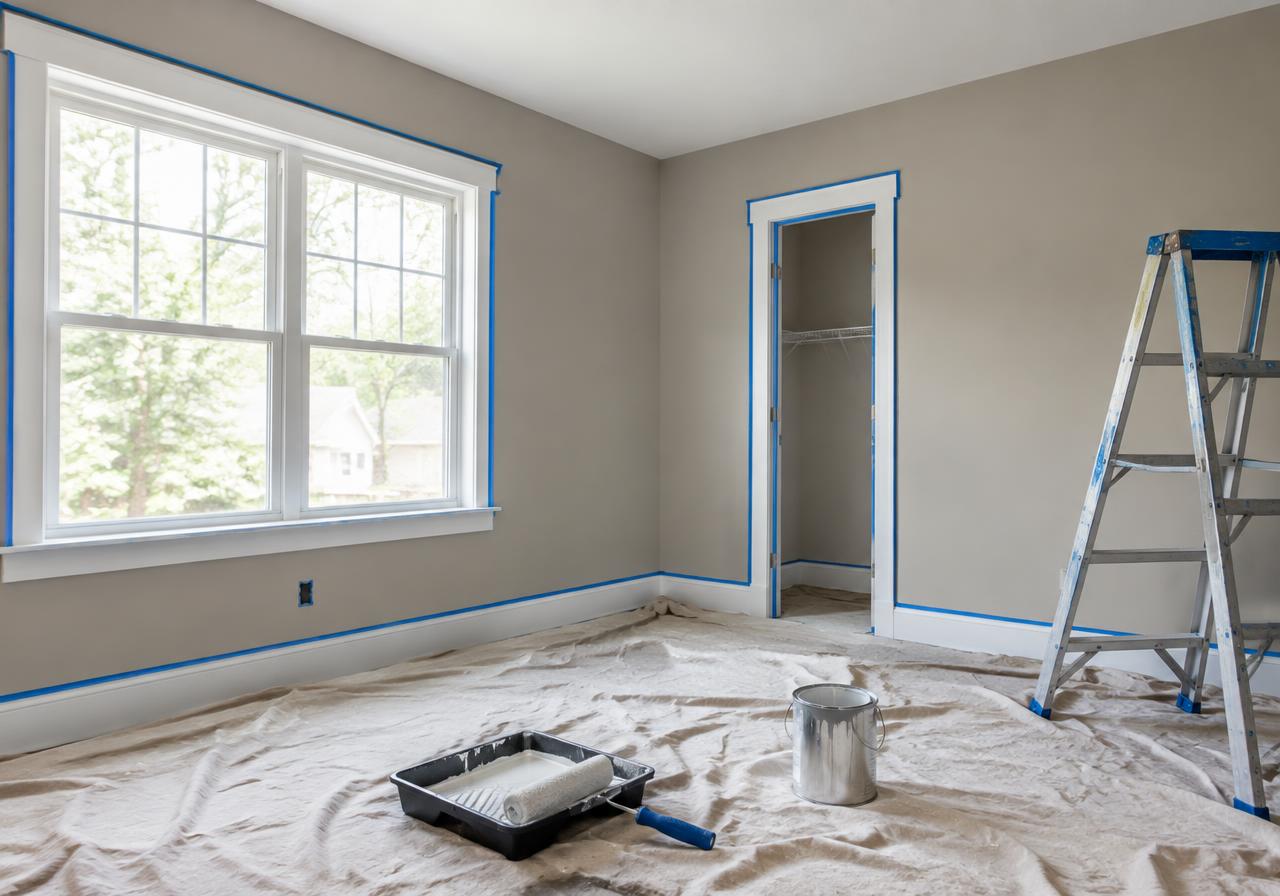
In an older East Texas home, most of a paint job happens before the first coat. Expect cleaning, crack and nail-pop repair, sanding of chalking or peeling areas, caulking and spot or full priming. Any active water source gets fixed first. Skipping prep is cheaper up front and shows within a season.
Why does prep matter more in an older house?
Paint is a thin film. It copies whatever is underneath it. On a house built in the last ten years, the walls are usually flat, dry and stable, so a quick clean and two coats look good for years. On a 1950s or 1970s home around Tyler, the same two coats sit over settling cracks, old patches that were never sanded flush, nail pops, chalked trim and sometimes a stain that nobody ever traced back to its source.
That is why two estimates for the same room can be hundreds of dollars apart. One of them is pricing paint. The other is pricing repair, sanding, caulking and priming, and then paint. Our interior and exterior painting work is quoted with the preparation written into the scope so you can see what you are paying for.
None of this is about selling you a bigger job. It is about not putting a fresh finish over a problem that will come back through it.
How do you read the walls before quoting a paint job?
We walk the room with a light held close to the wall at a low angle. That raking light shows everything a straight-on look hides: old roller texture, patches that bulge or dish, seams that were taped poorly, and the small ridges where drywall screws or nails have backed out.
Hairline cracks over doors and windows are usually normal settling and get taped or filled. Nail pops get the fastener reset, filled and sanded. Patches from a past repair often need to be skimmed again so they stop reading as a shadow under the new color.
On the outside of exterior walls and on older trim, we look for chalking — rub a hand across old paint and if it leaves a powdery residue, the surface has to be washed and primed or the new coat will not bond. Peeling edges get scraped back to something sound, feathered and primed rather than painted over.
How can you tell a water stain is old and dry or still active?
A brown or tan ring on a ceiling or wall tells you water was there. It does not tell you water is gone. Before we price a room with staining, we check whether the stain is still live: is it soft or spongy to press, does the drywall sound dull, is the paint blistering or bubbling at the edge, does the stain look darker after a run of rain, and is there a ring with a defined dark edge that has grown.
If the drywall is dry and firm all the way across and the stain edge has not moved, it is generally an old event. That gets a stain-blocking primer so the discoloration does not bleed through the finish coat, then paint.
If anything suggests it is still active, painting is the wrong next step. The source gets found and fixed first — a roof penetration, flashing, a window, a supply or drain line — and then the damaged material is addressed. Our water damage and water intrusion repairs cover removal of damaged materials, framing, drywall and flooring repairs. We do not claim mold remediation or restoration certification, and if a job needs that, we will tell you so and you can bring in a specialist.
What if the same crack keeps coming back?
Some cracks are a drywall problem. You fill them once and they stay filled. Others reopen in the same spot every year, usually at the corners of door and window openings, and that is a movement problem, not a finish problem.
Pay attention to whether the cracks come with other signs: floors that feel sloped or bouncy, doors and windows that stick or swing on their own, gaps opening at baseboards or crown. In a pier-and-beam house, those signs often travel together. We wrote about what to look for in signs a pier-and-beam house needs leveling.
If we see that pattern during a painting walkthrough, we say so before you spend money on finishes. Repairing and painting a wall that is still moving means repairing and painting it again.
What does the prep actually involve, step by step?
Clean first. Kitchen walls carry grease, bathrooms carry soap film, and trim near doors carries hand oils. Paint does not stick to any of it. Surfaces get washed and rinsed where needed and allowed to dry.
Repair next: cracks taped or filled, nail pops reset, holes patched, damaged trim repaired or replaced. Then sanding, which is the step most often skipped because it is slow and dusty. Patches get sanded flush, glossy old trim gets dulled so the new coat can grip, and peeling edges get feathered so you cannot see the transition through the paint.
Then caulking at trim joints, and priming — spot priming over repairs and bare spots, stain-blocking primer over discoloration, and full priming when the surface is chalky, bare or when there is a big color change. Only after that does the finish coat go on.
If your home was built before 1978, ask about lead-safe work practices before any sanding or scraping starts. The EPA's rules for renovation, repair and painting in pre-1978 housing are explained in Renovate Right, and a lot of Tyler-area housing falls into that range. It is a fair question to put to every contractor you are considering.
What should be agreed before the crew arrives?
Furniture, access and any surface repairs should be discussed ahead of time, not sorted out on the first morning. Decide who moves and covers furniture, where materials will be staged, which doors the crew uses, and what happens with pets.
Protection and cleanup belong in the estimate in writing: floor covering, masking of fixtures and hardware, dust control during sanding, and what the room looks like at the end of each day. If an estimate does not mention any of that, ask.
Schedule depends on area size, how much surface preparation the room needs, and weather — humidity and temperature affect dry times between coats, and in East Texas summers that is real. We would rather give you an honest window than a fast one we cannot hold.
How does paint fit with the rest of a remodel?
In a remodeled room, paint is close to last but not quite last. Drywall repairs, trim and any carpentry come first. Ceilings and walls get painted, then trim, and fixtures, switch plates and hardware go back on after.
If flooring is being replaced, it usually makes sense to paint before the new floor goes in or to protect it thoroughly afterward. Cabinet and countertop work in a kitchen renovation sets the sequence for the backsplash and the final wall color, so those decisions get made together rather than one at a time.
Pricing depends on scope, materials, site conditions and access, and is confirmed after we have looked at the actual rooms. Active-duty military members and first responders get a discount. Every project is quoted on site.
Frequently asked questions
Can you paint over wallpaper?
Sometimes, but it is a compromise. If the paper is fully bonded with no lifting seams and the wall underneath is sound, it can be primed and painted. If any edge is loose, moisture from the paint will lift more of it and you will see every seam. In an older home we usually recommend removing it and skimming the wall, and we will tell you which case you have after looking.
Do I need to move out while the interior is painted?
Usually no. Most homeowners stay and we work room by room so you keep a kitchen and a bathroom in use. If the job involves a lot of sanding or several rooms at once, we will tell you up front so you can plan around the dusty days.
Why do painting estimates vary so much between contractors?
Almost always because of prep and coats. One estimate may assume clean, sound walls and one coat, another prices crack repair, nail pops, sanding, caulking, priming and two finish coats. Ask each contractor to list the preparation steps and the number of coats, then compare the same scope.
Will a stain-blocking primer hide a water stain for good?
It will, as long as the leak that caused it has been fixed and the material is dry and sound. If water still reaches that spot, the stain comes back through the primer and the finish coat. That is why we check the source before we price the paint.
Do you repair drywall and trim, or only paint?
We handle surface preparation and repairs as part of painting, and we also do drywall, framing and trim work through our remodeling and water damage services. That means a damaged wall can be repaired and finished by the same crew instead of being handed between trades.