
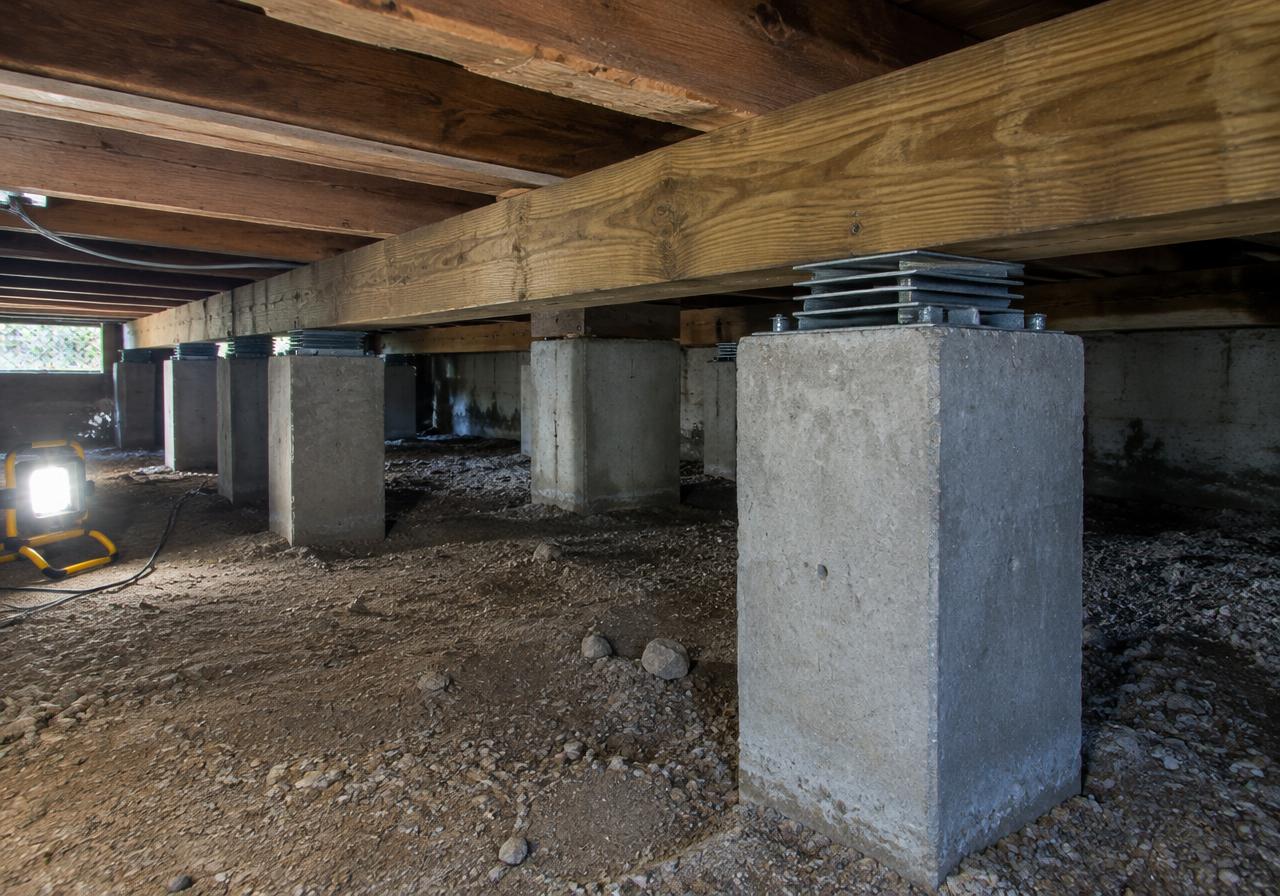
The three signs East Texas homeowners notice first are floors that slope or feel soft underfoot, doors and windows that stick or won't latch, and new cracks in walls near door and window corners. One sign alone proves nothing. A review of the home's piers, beams and supports determines the actual cause before any work is scoped.
What are the common signs a pier-and-beam house needs leveling?
Most calls we get start the same way: something in the house changed and the homeowner can't explain it. A marble rolls across the dining room. A door that closed fine for fifteen years now needs a shoulder. A hairline crack shows up above a doorway and keeps getting longer.
The signs worth paying attention to on an older pier-and-beam home are sloping or uneven floors, floors that feel springy or soft in one area, doors and windows that stick or won't latch, new cracks in drywall — especially running diagonally from the corner of a door or window — gaps opening between trim and wall or between baseboard and floor, and visible sagging in the crawlspace beams or piers.
The word that matters there is new. A house built in 1950 is not perfectly level and never was. What tells you something is moving is change: a crack that grew over a season, a door that used to work and doesn't now.
Do these signs always mean the foundation is the problem?
No, and this is the part worth slowing down on. Sticking doors can come from humidity swings and swollen jambs. Soft floors can be a rotted subfloor or joist from a plumbing leak rather than a settled pier. Drywall cracks can be old taping that finally gave up. Water under a crawlspace can be a drainage problem at the exterior, not a support failure.
We have also seen the reverse — a homeowner convinced it was just an old house, when a pier had shifted off its footing. The honest answer is that you cannot tell from inside the living room.
That is why we review the home before we quote anything. We look at the structure, we tell you what we actually find, and if the cause is drainage or a leak rather than settling, we say so. Our home leveling service starts with that review, not with a price.
What does a foundation and support review look at?
On a pier-and-beam home, we get under the house where access allows. We're looking at the piers themselves — whether they're plumb, whether any have shifted off their footings, whether the footings are sound. We check the beams and girders for sag, rot or insect damage, and the joists and subfloor above them for the same.
We take elevations across the floor so we can see where the high and low points are and how far apart they sit. That tells us whether the movement is one localized failure or something spread across the whole structure, which changes the plan entirely.
We also look for moisture: standing water, wet soil, poor grading at the perimeter, or a leak soaking a pier area. Wood that stays wet gives up eventually. Leveling a house without fixing the water that caused the problem just buys you a few years.
How does pier, beam and shim work fix the problem?
Leveling a pier-and-beam home means bringing the low areas back up and giving them something solid to sit on. Depending on what the review shows, that can mean resetting or replacing piers, adding new supports where the span is too long, replacing rotted beam or joist sections, and shimming to bring the floor back into plane.
The lift is done gradually. Raising a house too fast is how you crack plaster, split trim and open seams that didn't need to open. Patience here saves repair work later.
Once the structure is holding where it should, the house is stable — but the finishes inside usually need attention, which is the part a lot of homeowners don't plan for.
What gets repaired after leveling, and does Tyler require a permit?
Expect to repair drywall, trim and sometimes flooring after a house is lifted. Old cracks close and new ones open, baseboards and door casings no longer sit tight, doors need rehanging or planing, and tile or laminate at a transition can need work. We handle that side ourselves — drywall, trim, interior and exterior painting and flooring repairs — so you're not hiring a second contractor to finish what the leveling started.
One Tyler-specific point to plan for: the City of Tyler states that replacing sheetrock requires a permit, even when no walls or structure are being altered. That's listed in the City's own Development & Planning FAQs. Confirm current requirements with City of Tyler Development Services before work starts, since rules and fees change.
Smith County's ordinance page states that other than subdivision regulations, the County has no local building policies for construction in unincorporated areas — see Smith County Ordinances & Policies. So the requirements genuinely differ depending on which side of the city limit your house sits on.
How do I know if my address is inside Tyler city limits?
A Tyler mailing address does not mean you're inside the city. Our own shop is at 12196 County Road 46 in Tyler, and plenty of the homes we work on in Lindale, Chandler, Brownsboro, Hawkins and the rural stretches between them are outside any city limit.
The City points residents to the Smith County Map Site to check. Look your address up at SmithCountyMapSite.org before you assume either way, and confirm with the City if the result is unclear.
If you're outside Smith County — Henderson, Palestine, Athens, Longview and the rest of our service area — the local rules are set by that city or county, and we check before scheduling the finish work.
What affects the price, and what should I have ready?
Home leveling pricing depends on the size of the home, the foundation type, how much access there is under the house, and how many supports are involved. A small home with a tall, dry crawlspace and four bad piers is a different job from a large home with 18 inches of clearance and rot across a main beam. We confirm pricing after we've reviewed the home, not over the phone.
Active-duty military members and first responders get a discount. Every project is quoted on site.
Before the consultation, it helps to write down when you first noticed each symptom and whether it has gotten worse. Photograph cracks with a tape measure or a coin next to them for scale. Note any plumbing leaks, drainage problems or standing water near the house, and tell us about past foundation work if you know of any. Call (903) 787-0477 or use the contact page to set up a review.
Frequently asked questions
How fast do these problems get worse?
It varies. Some homes move seasonally with soil moisture and settle back; others keep going in one direction. That's why documenting when a crack or sticking door first appeared matters more than its size today — the rate of change tells us more than a single measurement.
Can you level a house with a slab foundation?
Our home leveling work focuses on pier-and-beam homes, where we can reach the piers, beams and supports under the structure. If your home is on a slab, tell us when you call and we'll be straight with you about whether the work you need is something we take on.
Will leveling fix my cracked walls and sticking doors by itself?
Not completely. Lifting the structure removes the cause, but the drywall, trim and door fit usually still need repair afterward. We plan that finish work into the scope from the start so you know the whole job, not just the lifting.
Do I need to move out while the work is done?
Most homeowners stay in the house during the lift, since the work happens underneath. The finish repairs afterward — drywall, paint, flooring — are the disruptive part, and we'll walk you through which rooms are affected and for how long before we start.