
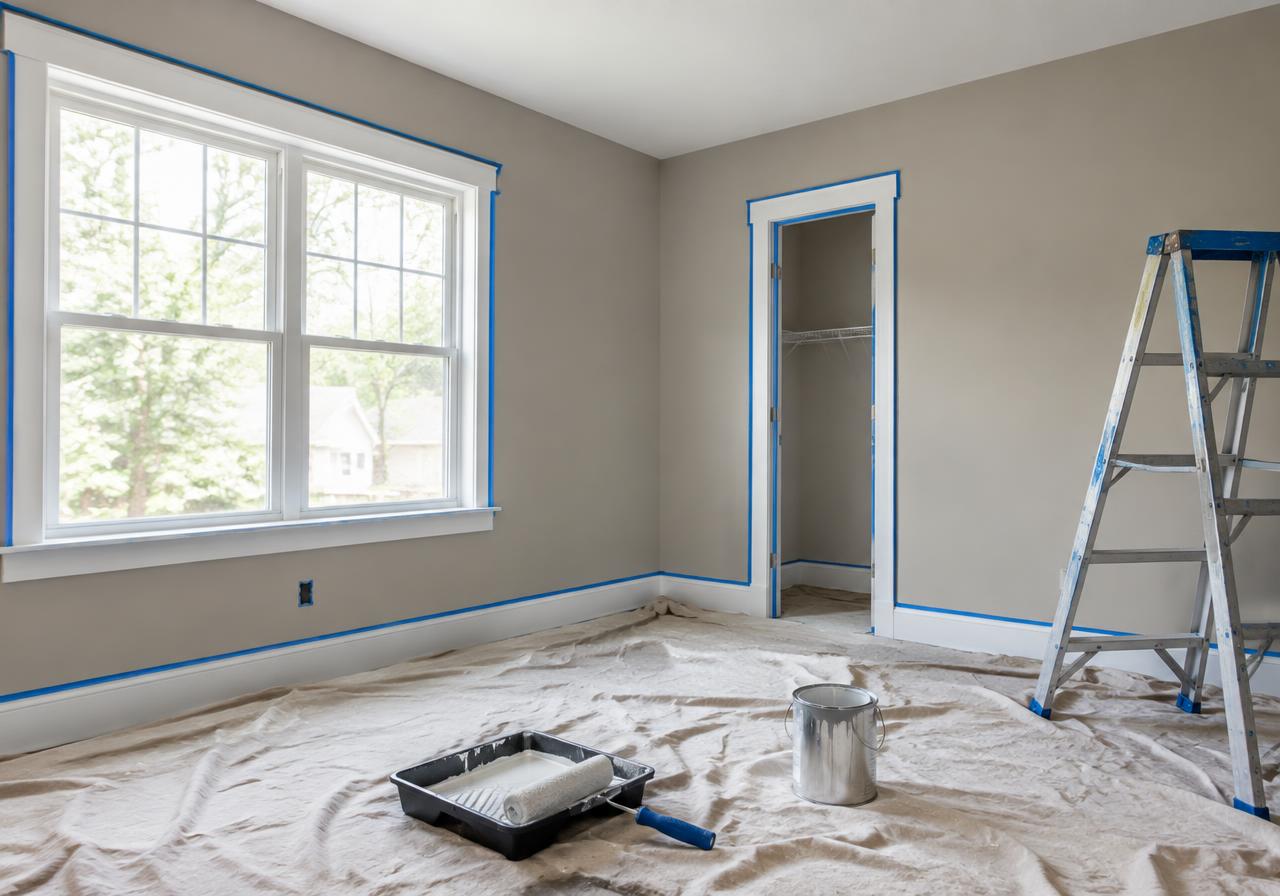
There is no single best month to paint a house exterior in East Texas. What governs the job is surface temperature, humidity, dew point and whether rain is expected inside the coating's drying window. Read the product's technical data sheet for its limits, then pick days that fit them. Spring and fall usually offer the most workable stretches here.
What actually decides whether today is a good day to paint?
Homeowners usually ask which month is best. The honest answer is that the calendar is a rough guide and the conditions on the wall are the real rule. Four things matter: the temperature of the surface itself (not the air), the relative humidity, the dew point, and whether rain is likely before the coating has dried and cured.
Surface temperature is the one most people miss. A south- or west-facing wall in Tyler can be far hotter than the air in July, and paint applied to a hot surface can skin over before it flows out properly. The same wall in January can still be cold at 9 a.m. even if the forecast high looks fine.
Dew point matters because moisture condenses on a surface when that surface is near or below the dew point. Paint applied onto a damp surface, or a surface that gets damp overnight, does not bond the way it should. The National Weather Service explains the difference between dew point and relative humidity clearly if you want the background.
Every coating publishes its own limits. Manufacturers list a minimum and maximum application temperature, a humidity range and a recoat time on the product's technical data sheet — the sheet for the exact product and sheen, not the general brochure. We read that sheet and work inside it rather than quoting a universal number, because the numbers differ by product.
Why is prep most of the job?
Most exterior repaints that fail early do not fail because of the paint. They fail because the surface underneath was not sound when the paint went on. A reasonable sequence is wash, scrape and sand loose or failing paint, make the surface repairs, caulk the joints that need it, spot-prime or fully prime bare areas, then paint.
Washing removes the chalk, pollen and mildew film that East Texas exteriors collect, and the surface has to dry fully afterward — in humid weather that can take longer than you expect. Scraping gets back to material that is actually holding. Repairs come next because paint does not fix rotten trim, split siding or an open joint; it hides it for a season.
Our painting work includes surface preparation and repairs, so when we walk a house we are looking at the condition of the siding and trim as much as the color. If sections of siding are past repair, that is a separate conversation about siding replacement before any painting is scheduled.
Does your house predate 1978?
If your home was built before 1978, a federal rule applies to work that disturbs painted surfaces. The EPA's Renovation, Repair and Painting (RRP) rule requires that firms performing renovation, repair or painting that disturbs lead-based paint in pre-1978 homes and child-occupied facilities be EPA- or state-certified and use lead-safe work practices. You can read the program details on the EPA Renovation, Repair and Painting Program page.
Exterior repainting routinely disturbs paint — scraping, sanding and power washing all do. That is why the build year of the house is one of the first questions worth answering. Check your deed, appraisal district record or closing paperwork, and confirm the year rather than estimating from the style of the house. Tyler has plenty of older housing stock where this applies.
The EPA also publishes homeowner information on lead and how to find certified firms. If your home is pre-1978, ask any painter you are considering — including us — to tell you plainly how they handle it before work starts. That conversation belongs in the estimate stage, not on day one of the project.
How do East Texas rain and humidity affect the schedule?
Exterior work here gets interrupted. A line of storms moves through, a wall stays wet into the late morning, humidity holds the recoat time out longer than the data sheet's best case. None of that is unusual and none of it is a reason to push coating onto a damp surface.
That is why we confirm the schedule for the specific project rather than promising a finish date in advance. Area size, how much surface preparation and repair the house needs, and the weather all move the timeline. A straightforward repaint on a sound house moves faster than one where half the trim has to be rebuilt first.
What we can do is tell you the sequence, which elevation we are starting on, and what a rain day does to the plan. If you want a written scope before any work begins, get in touch and we will walk the house first.
What about interior painting when the weather won't cooperate?
Interior painting is the sensible fallback when exterior conditions are against you. Walls, ceilings and trim are not subject to dew point or afternoon storms, so winter and the wettest stretches of spring are good windows for interior work.
It is also a practical way to keep a larger project moving. If exterior painting is one part of a bigger plan — a kitchen, a bathroom, interior layout changes — the indoor work can run while you wait for a dry stretch outside. Our painting services cover both interior and exterior residential work, including the surface preparation and repairs that go with each.
What should you sort out before the crew arrives?
Three things are worth settling in advance. Furniture and belongings: for interior work, what gets moved and by whom. Access: gates, pets, where a ladder or lift can safely sit, outdoor furniture and grills, and whether anyone is working from home. Surface repairs: what you already know is damaged, so it is priced in the scope rather than discovered mid-project.
Protection and cleanup should be covered in the estimate, in writing, so there is no question about who is masking what and what the site looks like at the end of each day.
On pricing, we don't publish numbers for painting because the real drivers are scope, materials, site conditions and access — a two-story house with steep grade around it is a different job from a single-story ranch with clear access. Every project is quoted on site after we have looked at it. We also offer a discount for active-duty military members and first responders.
Frequently asked questions
Can you paint a house exterior in summer in East Texas?
Yes, within limits. The constraint in summer is surface temperature and direct sun, not the air temperature on the forecast. That usually means following the shade around the house and starting early, and checking the product's technical data sheet for its maximum application temperature before deciding.
How long should you wait to paint after rain?
Until the surface is genuinely dry all the way through, which in humid weather can take considerably longer than the surface looks. Siding, trim and especially wood and masonry hold moisture. We check conditions on the day rather than working from a fixed number of hours.
How do I find out what year my house was built?
Check your deed, your closing documents or your county appraisal district record. Confirm it rather than guessing from the style of the house — the pre-1978 line determines whether the EPA's Renovation, Repair and Painting rule applies to work that disturbs paint.
Which areas around Tyler do you paint in?
We work in Tyler and across East Texas, including Lindale, Chandler, Brownsboro, Athens, Longview, Kilgore and the other towns listed on our service areas pages. D&D Rustics has been working in the area since 2014. Call (903) 787-0477 to arrange a consultation.
Should siding repairs happen before painting?
Yes. Paint does not repair split siding, rotted trim or open joints — it covers them until the next season. We look at the condition of the substrate during the walkthrough and include any needed repairs in the scope so the finish has something sound to hold onto.