
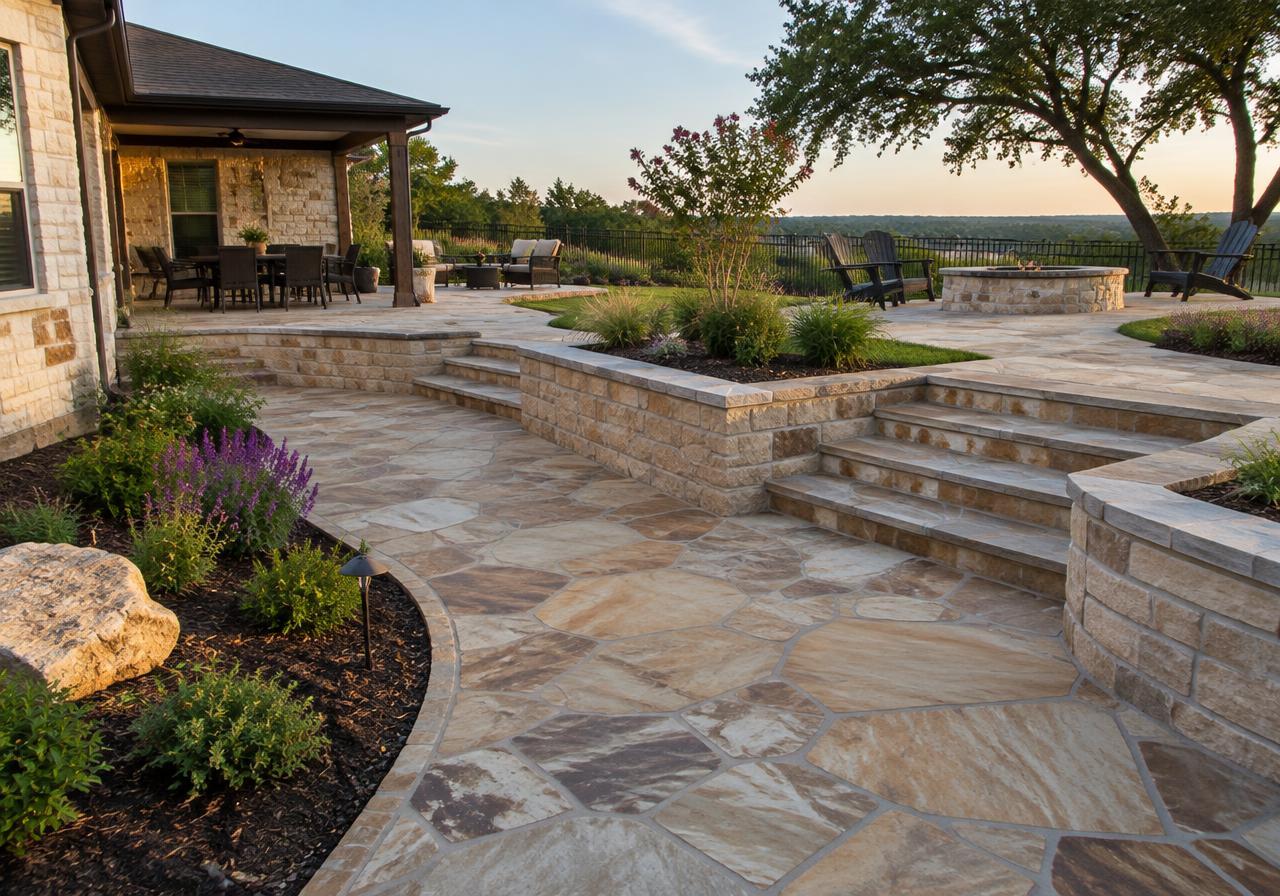
In Tyler, the deciding factor is usually water, not looks. A poured concrete slab suits flat or gently sloped yards where you can pitch the surface away from the house. Pavers suit yards that move, sit low, or need future access underneath, because individual units can be lifted and reset.
What has to happen under either surface before anything gets poured or laid
Both options live or die on what's underneath. The area gets cleared and excavated to depth, the subgrade gets shaped so water runs the direction you want, and a compacted base goes in. Skip or rush that part and you get a slab that cracks on a void, or pavers that dip in the middle of the first wet winter.
Access changes the scope more than most homeowners expect. If a concrete truck can reach the pour, the work is straightforward. If the only way into the back yard is a four-foot gate between the house and a fence, material gets moved by wheelbarrow or buggy, and that labor shows up in the price. Pavers are often easier to carry into a tight back yard than a slab is to pour there, which sometimes decides the material on its own.
We walk the site before quoting anything for exactly this reason. Site conditions and access are two of the things that move the number, along with scope and materials, and the price is confirmed after the project has been reviewed in person.
How each surface handles water in an East Texas yard
A poured slab is one continuous surface. Water doesn't go through it, so it has to go across it, which means the pitch has to be built in deliberately and has to carry water away from the house and away from any low spot where it will stand. That is a layout decision made before the forms go in, not something you fix afterward.
Pavers sit on a base with joints between them, so some water moves down through the joints and into the base rather than sheeting across the top. That helps on a patio that catches runoff, but only if the base is built to drain. A paver patio over a poorly draining base just holds the water lower down.
If the patio sits downhill of the house, or downhill of a neighbor's yard, neither material solves the problem by itself. That situation usually needs the grade reworked, and sometimes a drain line or a swale carrying water past the patio. Drainage planning is part of how we scope both hardscaping projects and poured concrete work, because the surface is the last decision, not the first.
What happens when something needs repair in ten years
Concrete is repairable but not reversible. Hairline cracks can be cleaned and filled, a tired surface can be resurfaced, and control joints give the slab a planned place to crack. But if a section settles badly or a utility needs to be reached underneath, you're breaking out concrete and matching a new pour to an old one, and the color rarely matches exactly.
Pavers are the opposite. A sunken corner can be lifted, the base rebuilt and compacted, and the same pavers reset. If you need to run a line under the patio, you pull the units, trench, backfill and put them back. The trade-off is ongoing attention: joints need to stay filled, and edge restraints have to hold or the outer rows start to creep.
Neither one is maintenance-free. The honest version is that concrete asks for less attention year to year and more work when it does fail, and pavers ask for a little attention regularly and are much easier to put right.
Stamped and decorative concrete finishes — and what to ask to see first
Stamped concrete gets you the look of stone or brick in a continuous slab, and it keeps the drainage behavior of a slab rather than a paver field. Patterns, textures and colors all vary, and the finish is applied while the concrete is still workable, so there is no do-over.
Before you commit to a pattern, ask to see the specific stamp and the specific color on real work, not a brochure. Color reads differently in full East Texas sun than it does on a sample board, and the same pattern looks different at a walkway width than it does across a wide patio. Our project gallery includes a stamped concrete walkway we built, which is a better reference point than a catalog page.
Also ask about sealing and about how slick the finish gets wet. A heavily textured stamp near a pool or a shaded north-side patio behaves differently from a light broom finish.
Where steps and retaining walls fit on a sloped lot
Plenty of yards around Tyler fall away from the house. On a slope, a patio has to be made level somehow, and that usually means either cutting into the hill with a retaining wall holding the uphill side, or building the pad up and holding the downhill edge.
Once a wall is in the plan, two things follow. The wall has to drain, so water behind it has somewhere to go instead of pushing on it, and the steps from the house to the patio have to be laid out so the rise is consistent. Uneven step heights are the most common thing people trip on in a back yard.
Steps, retaining walls, patios and walkways are all part of the same scope for us, and so is the layout and drainage planning behind them. Concrete and hardscape elements often end up in one project — a poured patio with paver or stone steps, or a stamped walkway tying into a wall.
Permits, easements and low-lying lots
Where the patio sits matters legally, not just practically. Inside Tyler city limits, permits and plans are submitted electronically through the city's development services process; the City of Tyler Forms and Applications page lists the forms and the registration requirements for contractors. Confirm with the city what your specific project needs before work starts.
Outside city limits, Smith County publishes its ordinances and policies online, including a Flood Damage Prevention Regulation that applies to development in the unincorporated county. If your lot is in or near a floodplain, that regulation can apply to filling, grading and structures, so check the Smith County ordinances and policies page and call the county to confirm your situation.
Separately from permits, check your plat for drainage and utility easements before you set a patio footprint. Building a slab or a wall over an easement can mean removing it later at your own cost. If you're also doing interior work, our post on remodeling permits in Tyler covers the city side in more detail.
How we plan a patio project
We've been doing residential construction in East Texas since 2014, and we work across Tyler and the surrounding towns. A patio starts with a site visit: where water goes now, how the yard falls, how equipment and material get to the back, and what you actually want to use the space for.
From there we put a scope in writing — surface, base, drainage, any steps or walls — so you know what's included before anything is ordered. Pricing depends on scope, materials, site conditions and access, and it's confirmed after we've reviewed the project in person. We offer a discount for active-duty military members and first responders.
If you want to talk through a patio in Tyler or nearby, call (903) 787-0477 or get in touch here.
Frequently asked questions
Which lasts longer in East Texas, concrete or pavers?
Both can last decades when the base is right. A properly poured and jointed slab will usually need less attention year to year; pavers tolerate ground movement better because individual units can be lifted and reset. The base and the drainage decide the outcome far more than the material does.
Do I need a permit for a backyard patio in Tyler?
It depends on the project and where the property sits. Inside the city, permits and plans go through the City of Tyler's electronic submission process, so confirm with the city before starting. Outside city limits, Smith County's flood damage prevention regulation can apply near floodplains. Check with the city or county for your address.
Can concrete and paver or stone work be combined in one project?
Yes. We regularly combine poured concrete with hardscape elements — a slab patio with stone or paver steps, or a stamped walkway tying into a retaining wall. Keeping it in one scope means the grades, drainage and finish heights all get planned together.
Will a new patio make my drainage problem worse?
It can, if the grade isn't reworked. Adding a hard surface changes where water goes. We look at the existing drainage during the site visit and plan the pitch, and any drain or swale, as part of the scope rather than something to sort out after the pour.
Do you build patios outside Tyler?
Yes. We work across East Texas, including Lindale, Chandler, Brownsboro, Athens, Longview, Kilgore and the other towns listed on our service areas pages. Travel and site access are part of what we review before quoting.