
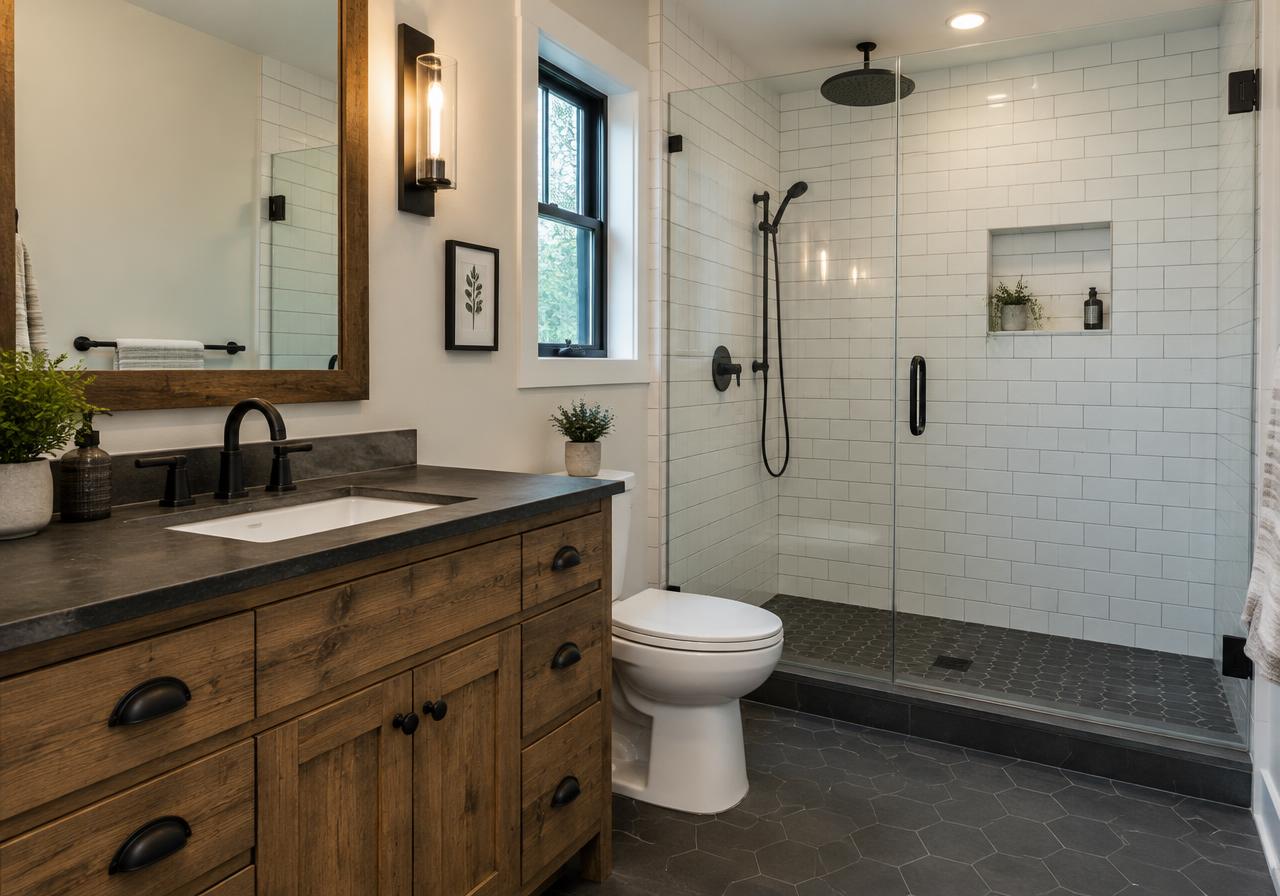
Published ranges for a Tyler bathroom remodel are wide: Houzz lists $6,500 to $32,419, while HomeYou puts the local average near $9,000, or $3,000 to $7,000 for essentials only. Where you land depends on room size, tile area, fixture choices, layout changes and what is found behind the walls. Every project is quoted on site.
What do the published ranges for Tyler actually say?
Two sources publish numbers for this market. Houzz's Tyler bathroom remodeler listing states the average cost for bathroom remodeling ranges from $6,500 to $32,419. HomeYou puts an average Tyler bathroom remodel around $9,000, or $3,000 to $7,000 when the scope is limited to essentials.
A spread that wide is not a pricing failure on their part. It is what happens when you average a vanity-and-paint refresh against a full gut with a moved shower drain. The two jobs share a room and almost nothing else.
We do not publish our own price list, because we do not know your room yet. What we can do is explain which side of that range a project like yours sits on, and why.
What is the difference between a refresh, a layout change and a full gut?
A cosmetic refresh keeps every fixture where it is. New vanity and top, new faucet and lighting, paint, maybe new flooring and a tiled shower surround over sound framing. Plumbing and drain locations do not move. This is the lower end of the published bands.
A layout change moves something: the toilet to the other wall, a tub swapped for a larger walk-in shower, a single vanity turned into a double. Once a drain or supply line relocates, the floor usually opens up, and on a pier-and-beam home that means working underneath. The labor and the trade coordination both go up.
A full gut takes the room back to studs and subfloor. Everything gets replaced and anything hidden gets exposed. This is where projects approach the upper end of the Houzz band, and it is also where surprises are most likely to be found and priced honestly rather than guessed at.
What actually drives the number up or down?
Room size matters less than people expect, and tile area matters more. A small bathroom with a floor-to-ceiling tiled shower, a niche and a mosaic floor can carry more tile labor than a larger bathroom with a prefabricated surround. Tile is cut, set and grouted by hand, and the pattern you pick changes the hours.
Fixture and material selections are the part you control most directly. Vanities, tops, faucets, shower valves, glass and lighting all come in a long price ladder. We plan scope and selections together so the budget is decided before anything is ordered, not discovered afterward.
Then there is what is behind the walls and under the floor. Old leaks around a tub or toilet flange, soft subfloor, rot in framing, or plumbing that no longer meets current practice all show up after demolition. If you have already had a leak in that room, read our guide to what gets removed and rebuilt after water damage before you set a budget.
Access counts too. A second-floor bathroom or a tight hall changes how material and debris move in and out, and that is part of why we review the site before confirming a price.
When does a bathroom remodel need a permit in Tyler?
A like-for-like cosmetic update is a different thing from relocating plumbing or altering framing, and the trigger point is worth checking before you start. The City of Tyler requires permits and plans to be submitted electronically, and contractors to be registered with the city before they can apply, per the City of Tyler Development Services forms and applications page. Confirm your specific scope with the city before work begins.
We cover the thresholds in more detail in our post on remodeling permits in Tyler. Permit and inspection costs belong in your budget conversation, not as an afterthought.
If your home is outside the city limits on a septic system, adding a bathroom is a separate question entirely, because fixture count affects the system. See adding a bathroom under Smith County septic rules.
How does D&D Rustics price a bathroom?
We have been doing residential construction and remodeling out of Tyler since 2014. On bathroom renovations that means tile and shower updates, vanity and fixture replacement, and scope planning before anyone swings a hammer.
Pricing depends on scope, materials, site conditions and access, and it is confirmed after the project is reviewed. We walk the room, talk through what you want changed and what can stay, go over selections, and then put a number to it. If something unexpected turns up behind a wall, you hear about it with options, not a surprise line on an invoice.
Active-duty military members and first responders receive a discount. Mention it when you call.
To get started, call (903) 787-0477, email dndrusticstx@gmail.com, or request an estimate.
Frequently asked questions
Can I keep my existing tub to save money?
Often yes. If the tub is sound and stays in place, you can retile the surround, replace the valve trim and update the rest of the room without touching the drain. Keeping fixtures in their existing locations is one of the more effective ways to hold a bathroom project toward the lower end of published ranges.
Why can a small bathroom cost as much as a large one?
Because cost follows tile area, fixture count and plumbing work, not square footage. A compact bathroom with a fully tiled shower, a niche and a patterned floor involves more cutting and setting than a bigger room with simpler finishes. Small rooms are also tighter to work in, which slows every trade down.
Can you give me a price over the phone?
We can talk through ranges and what tends to drive them, but we do not give a firm number without seeing the room. Site conditions, access and what sits behind the walls all affect the price, so it is confirmed after the project is reviewed.
How far from Tyler do you work?
We work across East Texas, including Lindale, Chandler, Brownsboro, Athens, Longview, Kilgore and Henderson. See our service areas for the full list.
Should I pick materials before or after the estimate?
Have a direction in mind beforehand, then finalize selections during scope planning. Fixture, tile and countertop choices move the number more than almost anything else, so pinning them down early is what makes an estimate hold.